
Computing
Intent Statement:
At Meadowhead Junior School, our intent for the Key Stage 2 Computing curriculum, based on the Kapow Primary scheme of work, is to equip pupils with the knowledge, skills and understanding they need to thrive in an increasingly digital world. We aim to develop confident, responsible and creative users of technology who can apply computational thinking and digital skills across the curriculum and into real-life contexts.
Through the Kapow scheme, our curriculum is carefully sequenced to build on prior learning from Key Stage 1, ensuring progression in the key strands of computer science, information technology and digital literacy. Pupils develop a strong foundation in coding and computational thinking, learning how to decompose problems, recognise patterns, design algorithms and debug programs using a range of age-appropriate software and devices.
We intend for pupils to become competent in using technology to create, organise, store, manipulate and present digital content, including text, images, data and multimedia. By engaging in purposeful and creative projects, pupils learn how digital tools can be used to communicate ideas effectively and solve problems.
A key element of our intent is to ensure that pupils understand how to use technology safely, respectfully and responsibly. Online safety and digital citizenship are woven throughout the Kapow curriculum, enabling pupils to develop an awareness of potential risks, understand how to keep themselves and others safe online, and make informed choices about their digital footprint.
Our KS2 Computing curriculum also aims to promote curiosity, resilience and independence, encouraging pupils to experiment, collaborate and persevere when faced with challenges. We strive to ensure that all pupils, regardless of background or ability, can access and succeed in computing, preparing them with essential skills for the next stage of education and for life in modern Britain.
Implementation Statement:
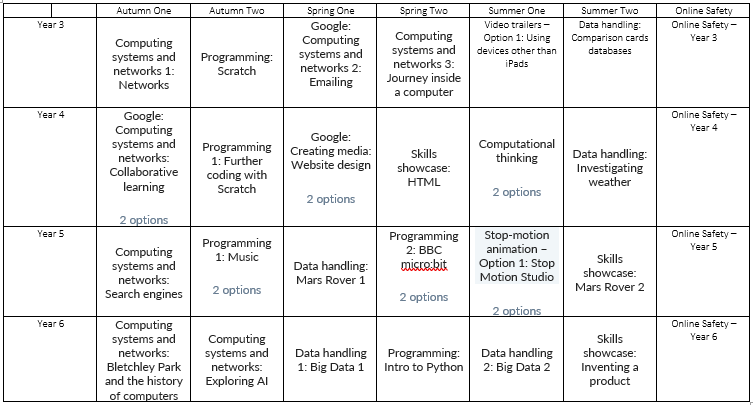
At Meadowhead Junior School, Computing is taught as a weekly discrete subject across Key Stage 2 using the Kapow Primary scheme of work, ensuring a consistent and progressive curriculum for all pupils in our two-form entry junior school. The curriculum is carefully sequenced to build on prior knowledge and experiences, with clear progression across the strands of computer science, information technology and digital literacy.
Lessons are delivered using Chromebooks and iPads, enabling pupils to develop practical, hands-on skills through a range of programming, data handling and creative digital tasks. Teachers use Kapow’s structured planning and subject knowledge guidance to ensure clarity of instruction, consistency between classes and high-quality learning experiences for all pupils.
Given our school context, inclusion is central to implementation. Lessons are adapted to meet the needs of pupils with high levels of SEND and disadvantage through careful scaffolding, visual supports, chunked instructions, adult support and opportunities for overlearning. Adaptive teaching ensures all pupils can access core learning, while providing challenge and extension where appropriate.
Oracy is embedded throughout computing lessons. Pupils are encouraged to explain their thinking, discuss algorithms, justify choices and use correct technical vocabulary through paired work, group discussions and class reflection. This supports both conceptual understanding and communication skills.
Enrichment opportunities are woven into the curriculum through creative projects, cross-curricular links and real-life applications of technology, helping pupils to see computing as purposeful and relevant. Online safety is taught explicitly and revisited regularly, ensuring pupils develop a secure understanding of how to use technology safely, respectfully and responsibly in and beyond school.
Ongoing formative assessment is used to identify misconceptions, inform teaching and support progression. Subject leadership ensures regular monitoring, staff support and curriculum refinement to meet the needs of our pupils.
Impact Statement:
As a result of the KS2 Computing curriculum at Meadowhead Junior School, pupils develop the knowledge, skills and confidence needed to engage successfully with technology, regardless of starting point. Pupils demonstrate clear progression in computational thinking, problem-solving and digital creativity, applying these skills with increasing independence over time.
Pupils are able to articulate their learning using appropriate technical vocabulary, reflecting the school’s focus on oracy. They can explain how programs work; describe the steps they have taken to solve problems and evaluate digital outcomes thoughtfully.
The inclusive approach ensures that pupils with SEND and those who are disadvantaged are well-supported to access and succeed in computing. Gaps in knowledge and confidence are reduced through consistent teaching, repetition and targeted support, enabling pupils to achieve positive outcomes.
Pupils engage enthusiastically in computing lessons and enrichment opportunities, demonstrating resilience, curiosity and pride in their digital work. They show a strong understanding of online safety and digital responsibility, making informed choices when using technology.
By the end of Key Stage 2, pupils are well-prepared for the next stage of their education. They leave Meadowhead Junior School as confident, responsible users of technology with transferable skills that support learning across the curriculum and equip them for life in an increasingly digital society.