
PSHE / RSHE
PSHE
Intent
At Meadowhead Junior School, PSHE and RSHE education is a vital part of our curriculum, designed to support pupils in becoming confident, resilient, emotionally literate and responsible citizens. Our intention is to equip all children with the knowledge, skills and attitudes they need to lead safe, healthy and fulfilling lives — both now and in the future.
Using the Kapow Primary scheme of work, our curriculum aims to:
-
Develop pupils’ understanding of relationships, health, wellbeing, citizenship, and economic stability in a structured, age-appropriate and progressive way.
-
Enable pupils to form positive relationships, recognise and manage emotions, and communicate with respect and empathy.
-
Promote pupils’ understanding of physical and emotional changes during puberty and provide honest, factual information to help them make informed, safe choices.
-
Foster a strong sense of personal identity, self-worth and resilience.
-
Encourage children to understand the importance of belonging to and contributing positively to their community and the wider world.
-
Build financial awareness and an early understanding of economic wellbeing.
-
Ensure all pupils develop the knowledge and vocabulary needed to stay safe — including online safety, digital resilience and protective behaviours.
-
Create an inclusive curriculum that reflects and respects diversity, ensuring all pupils feel represented and valued.
Our intent is that by the end of Key Stage Two, pupils are well-prepared for the challenges of adolescence and secondary education, and can confidently apply their learning to real-life situations.
Implementation
Our PSHE and RSHE curriculum is delivered through the Kapow Primary Key Stage Two scheme of work, ensuring a consistent, high-quality and spiral approach across all year groups. The curriculum is implemented through:
1. A progressive, structured scheme
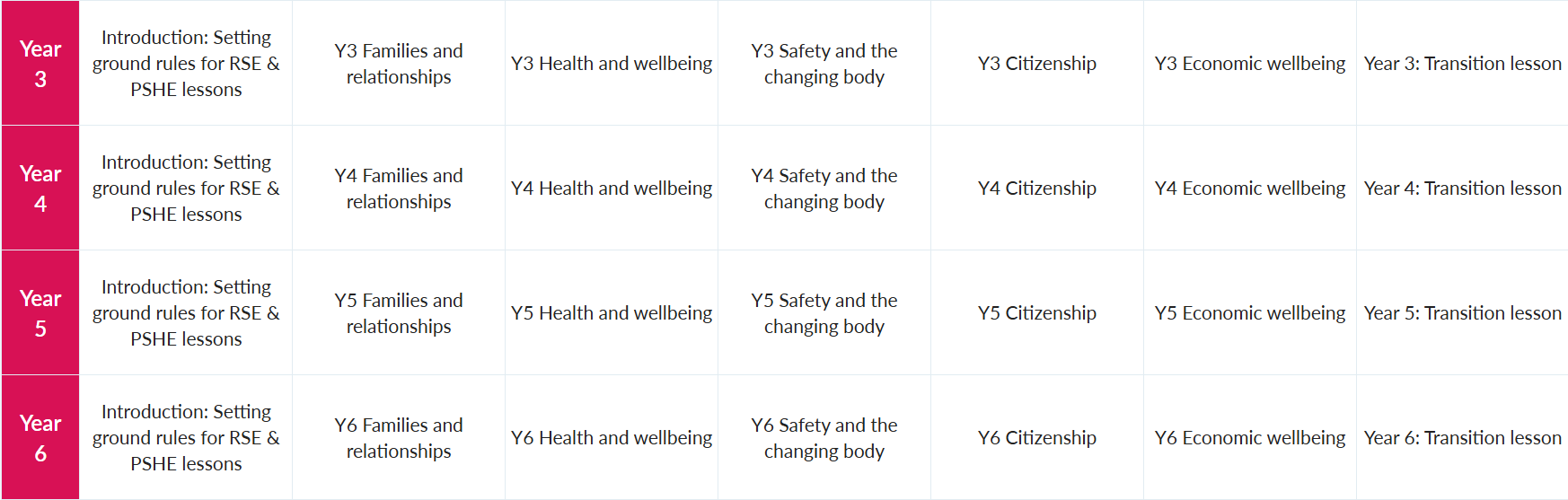
Kapow is organised into five core themes:
-
Families and Relationships
-
Health and Wellbeing
-
Safety and the Changing Body
-
Citizenship
-
Economic Wellbeing
These themes are revisited regularly so that knowledge deepens and skills develop over time, building on prior learning and preparing pupils for future content.
2. Weekly, high-quality lessons
-
Lessons are taught weekly by class teachers, using detailed plans and multimedia resources.
-
Clear learning objectives, discussion prompts, scenarios and activities support progression and consistency.
-
Vocabulary is explicitly taught and revisited to strengthen understanding.
3. A safe, inclusive learning environment
-
Ground rules, class charters and protected discussion spaces enable sensitive topics to be approached respectfully and safely.
-
Teachers are trained and supported to deliver RSHE content with confidence.
-
All lessons are inclusive and adapted to meet the needs of all learners, including SEND.
4. Active, engaging pedagogy
Teaching strategies include:
-
Role-play and scenario-based tasks
-
Group discussion and reflection
-
Problem-solving activities
-
Creative responses
-
Real-life case studies
-
Opportunities for emotional literacy development
This approach ensures pupils can practise applying skills such as decision-making, empathy, communication and critical thinking.
5. Cross-curricular links and wider school life
-
RSHE content related to puberty, reproduction and body changes is complemented through the science curriculum.
-
Online safety is supported through computing.
-
Physical and emotional wellbeing is reinforced through PE, pastoral care, themed weeks and assemblies.
-
Whole-school events such as Anti-bullying Week, E-Safety Day, and charity initiatives further enrich learning.
6. Assessment and monitoring
-
Kapow’s built-in assessment opportunities (self-assessment, teacher observation and knowledge checks) support ongoing formative assessment.
-
Pupil voice activities are used to evaluate outcomes and ensure learning is meaningful.
-
Subject leaders monitor coverage, progression and the quality of provision through lesson observations, planning scrutiny and staff feedback.
Impact
Through our carefully structured PSHE and RSHE curriculum, pupils leave Key Stage Two with the knowledge, understanding and personal skills needed to navigate an increasingly complex world. The impact of our curriculum is seen in pupils who:
-
Demonstrate confidence, emotional resilience and self-awareness.
-
Show respect, empathy and understanding in their relationships with others.
-
Understand how to maintain both physical and mental health.
-
Can recognise risk, keep themselves safe (including online), and know how to seek help when needed.
-
Have a secure understanding of puberty, body changes and healthy relationships.
-
Are able to make informed, responsible decisions based on values and understanding.
-
Understand their rights and responsibilities as citizens, both locally and globally.
-
Can manage money thoughtfully and have an emerging awareness of economic wellbeing.
-
Are prepared for the transition to secondary school with a strong foundation in personal development and social understanding.
We measure the impact through:
-
Pupil voice, indicating increased confidence and retention of key knowledge.
-
Evidence in class books or floor books.
-
Teacher assessment and reflections.
-
Behaviour, wellbeing indicators and safeguarding records.
-
Feedback from parents and external agencies.
Ultimately, our PSHE and RSHE provision empowers pupils to thrive as healthy, safe, respectful and responsible members of society, fully supported by the progressive and comprehensive Kapow Primary scheme.
PSHE Overview:

Key Points on Curriculum Content and Parental Rights:
-
Relationships Education (Non-Objectionable Content):
- The primary curriculum emphasises relationships and emotional wellbeing, teaching children about friendships, respect, and family values.
- Topics cover safe online and offline relationships, changes during puberty, and personal responsibility.
- Parents cannot withdraw children from these lessons, as relationships and health education are statutory and focus on safeguarding and respectful social skills.
-
Content Parents May Object To:
- Sex Education: There is no sex education component in primary RSHE, and Meadowhead Junior School does not cover topics such as sexual intercourse, contraception, or sexual health.
- Science Curriculum (Non-Objectionable, but Sensitive Content): While not part of RSHE, the Science curriculum may touch on basic biological aspects of puberty and reproduction (e.g., body parts, changes in puberty). Parents cannot withdraw children from these scientific discussions, as they are part of the statutory Science curriculum.